The accountability record
English

Benjamin Netanyahu / The accountability record

Netanyahu failed.
Israel paid.
No more excuses.

About 1,200 people were killed. 251 were taken hostage. Benjamin Netanyahu was prime minister. He bears political responsibility for the catastrophic failure to protect them. The warnings, the decisions and the aftermath belong on the record.

Benjamin Netanyahu
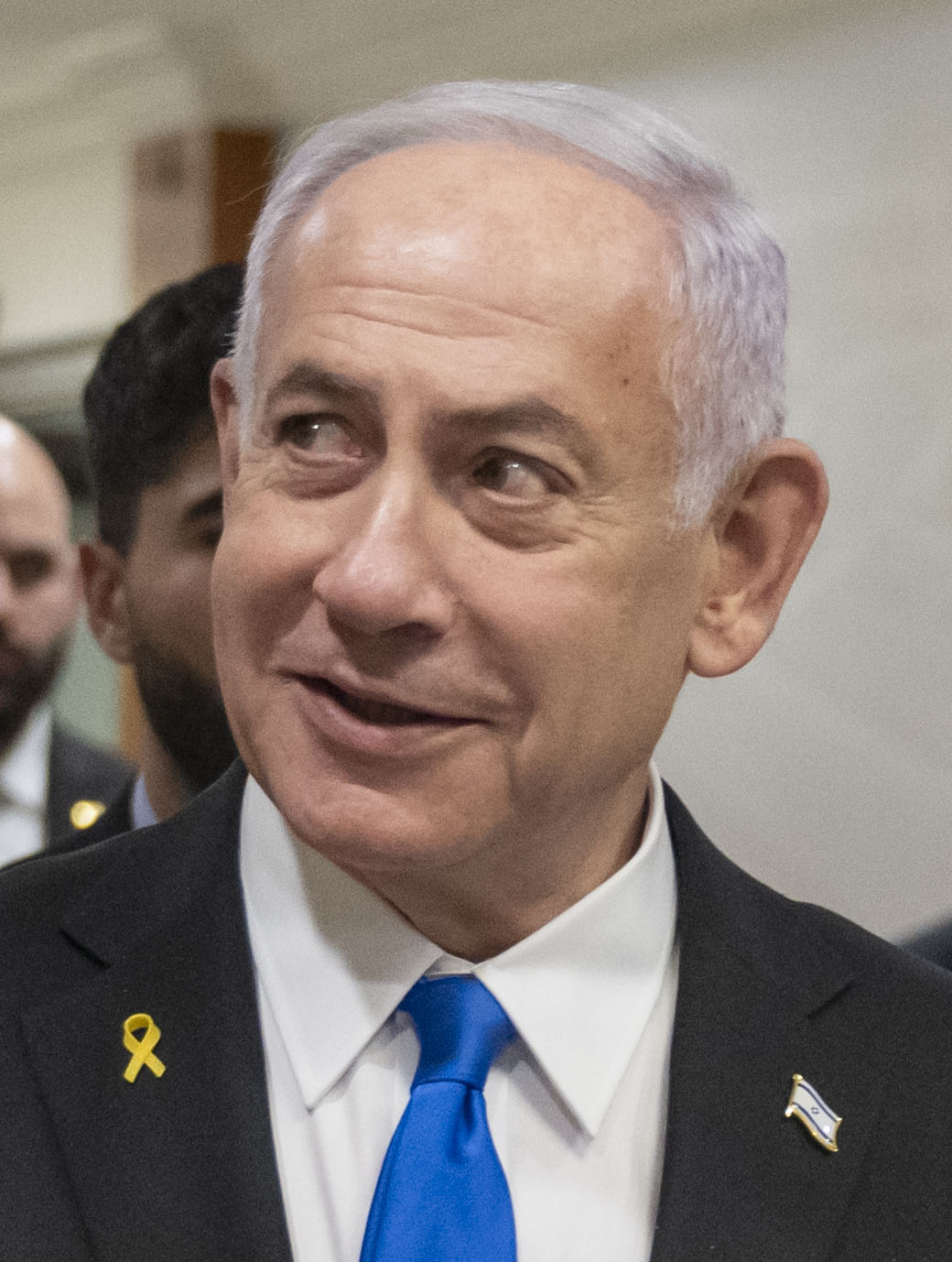
Benjamin NetanyahuArchive photograph · 2025

Accountability starts at the top.

Our position: Netanyahu bears political responsibility for the October 7 catastrophe. Hamas-led attackers committed the massacre. The prime minister’s duty was to lead a state capable of protecting its people. The failures of the IDF and Shin Bet do not absolve him.

This is an accountability dossier with an explicit editorial position. Official findings, documented events and disputed allegations are labeled separately. Denials are included. Political responsibility is our argument; it is not a claim that a court has convicted Netanyahu over October 7.

Official findingDocumented factDisputed allegationDenial included
01 - Before October 7

The danger was not invisible.
The warnings were there.

Four intelligence warnings. A defense minister’s public alarm. Years of failed assumptions and unfinished preparation. The record of failure began long before the morning of October 7.

The policy of “quiet” and containment allowed Hamas to grow stronger.

The Shin Bet investigation listed the policy of quiet, erosion of deterrence, and reliance on intelligence and defensive measures among the factors that enabled Hamas to build power. The political criticism is that managing Hamas was preferred for years over a strategy aimed at fundamentally reducing its capabilities.

Recommendations for offensive action against Hamas leaders were not always adopted.

According to the Shin Bet investigation, the agency proposed operations and targeted actions against senior Hamas figures at different points, but some were rejected by the political echelon. There is no way to prove they would have prevented October 7, but they show alternatives to containment existed.

Reports say Netanyahu was warned that Qatari money was reaching Hamas’s military wing - yet the policy continued.

Reporting in 2025 said Shin Bet chief Nadav Argaman and IDF intelligence warned in 2019 - 2020 that money entering Gaza was also being diverted to the military wing. Netanyahu’s office denied receiving a warning that Qatari grant money was financing terrorism.

Israel entered October 7 without an approved, binding national-security doctrine.

The State Comptroller called this a multi-year failure and said Netanyahu did not fulfill his responsibility to complete and approve a binding national-security doctrine, despite having initiated work on one years earlier.

Gallant warned of an immediate security danger from the internal rupture - and Netanyahu announced his dismissal.

Defense Minister Yoav Gallant urged a halt to the judicial legislation, saying the internal rupture created a clear and immediate danger to national security. Netanyahu announced his dismissal the next day; the move was later suspended. Further warnings followed about how Israel’s enemies were interpreting the division and declining cohesion.

The civilian front and emergency systems remained materially underprepared.

The State Comptroller described prolonged neglect in civilian emergency management and later documented gaps in shelters, economic preparedness, evacuation and government coordination. Responsibility in these reports is shared among the prime minister, ministers and implementing bodies - but the prime minister heads the system.

Egypt said it warned Israel that “something big” was coming.

An Egyptian intelligence official told AP that Egypt repeatedly warned Israel of a major event in Gaza. U.S. House Foreign Affairs Committee chairman Michael McCaul said after an intelligence briefing that Egypt had indeed warned Israel roughly three days before the attack, but he did not know at what level the warning was received. Netanyahu and his office denied receiving such advance warning. The existence of a warning to Israel is therefore supported by several sources; the claim that Netanyahu personally received it is not publicly proven.

The new investigation: Mohammed bin Zayed warned Netanyahu that Sinwar was preparing a “major move.”

According to an investigation by Shlomi Eldar and Ruth Yuval, the UAE president warned Netanyahu about ten days before the attack, and Netanyahu did not pass the warning to Israel’s security chiefs. The Prime Minister’s Office denies the conversation occurred. AP confirmed the existence of the report and the denial; the underlying source material has not been made fully public.

A border-defense report delivered to senior leaders before October 7 already identified serious protection gaps.

The State Comptroller later said an audit of IDF posts on the northern border, delivered before October 7 to the prime minister, defense minister and chief of staff, should have served as a warning light about border protection. It concerned the north, not Gaza, so it is not evidence of a specific Hamas warning - but it is evidence of broader readiness gaps.

02 - The morning of October 7

Even after he was alerted,
the hours kept passing.

The timeline below relies mainly on the version published by the Prime Minister’s Office itself in September 2026.

06:29

First update

According to the PMO, the military secretary first informed Netanyahu that an attack was underway from Gaza.

06:44

Second update

Netanyahu asked why there had been no earlier indication and requested checks on broad reserve mobilization and striking Hamas leadership.

07:30

Leaves for military headquarters

According to the PMO timeline, Netanyahu left his residence for the Kirya about an hour after the first update. He spoke with Defense Minister Yoav Gallant on the way.

~08:00

Arrival at the Kirya

The PMO said he arrived around 08:00; other reporting citing official records gave a later time.

09:55

Situation assessment with security chiefs

Three hours and 26 minutes after the first reported update, according to the PMO timeline, the first assessment with the heads of the security establishment took place. Orders for full mobilization, a war order, sealing the border and northern preparedness were issued in that framework. Reporting also says this was Netanyahu’s first direct contact with the IDF chief that morning.

“They didn’t wake me” does not settle the question of responsibility.

In August 2026 Netanyahu said the heads of the security establishment did not wake him during the night, and that if they had, “everything would have been different.”

That claim addresses the hours before 06:29. It does not answer for the policy of the preceding years, warning procedures, civilian readiness - or what happened after Netanyahu was informed. A prime minister is not only a recipient of alerts; he heads the system responsible for policy, preparedness, coordination and response.

03 - After the attack

The failure did not end.
Neither should the demand for answers.

Survivors needed a functioning government. Families needed leadership. Instead, the record includes delayed engagement, failures of civilian care, blame-shifting and an unlawful dismissal of the Shin Bet chief.

A week passed before Netanyahu’s first visit to Be’eri and Kfar Aza.

His first visit to these devastated communities was on October 14, 2023: one week after the attack. The delay forms part of the public criticism of his response to the catastrophe.

The first meeting with representatives of hostage families took place eight days after the attack.

Netanyahu first met representatives of hostage and missing-person families on October 15. Critics argued that direct engagement began too late given the scale of the event.

Netanyahu blamed the security chiefs for not warning him - then deleted the post and apologized.

In a wartime post, Netanyahu said he had never been warned of Hamas’s intention to start a war and pointed toward the intelligence chiefs. After intense criticism, he deleted the post, apologized and said he had been wrong.

The civilian system was not prepared for the scale of the disaster.

State Comptroller reports described failures in evacuation and absorption, medical and mental-health response, shelters and civilian emergency management. In several areas, volunteers and local authorities filled gaps that the state could not quickly cover.

Qatargate: Netanyahu-linked advisers were investigated over alleged work and payments connected to Qatar.

The Qatargate investigation has involved Jonatan Urich and Eli Feldstein, while reports described payment routes from Qatar to Israeli figures and people connected to Netanyahu’s office. In August 2025, Kan reported, citing law-enforcement estimates, payments that allegedly reached Netanyahu-linked advisers. These are allegations and investigative reports, not convictions. Netanyahu called the affair political persecution; Qatar denied wrongdoing.

Published messages showed efforts to push pro-Qatar narratives into Israeli media during the war.

Israeli media published correspondence indicating attempts to promote messages favorable to Qatar and more negative toward Egypt. The people involved have offered differing accounts and denials, and the matter remains part of a wider investigation.

A security source alleged Netanyahu advisers passed classified Egypt material to Qatar so anti-Egypt narratives could be fed back into Israeli media.

Israel Hayom reported that a senior security source alleged Jonatan Urich, Srulik Einhorn and Eli Feldstein transferred information from classified discussions about Egypt to Qatar; the claim is that Doha then used it in a campaign that weakened Egypt’s standing as mediator and strengthened Qatar’s. A second security source confirmed the Egypt discussions took place and said the issue had been inflated. Urich and Einhorn strongly denied the allegation. At present this remains a journalistic/investigative allegation, not a judicial finding.

By September 2026, a conventional state commission of inquiry still had not been established.

The government and coalition advanced an alternative inquiry mechanism while families, civil-society groups and legal figures called for an independent state commission under the conventional framework. The fight over who gets to appoint the investigators became part of the accountability dispute itself.

Limits of the evidence

What should not be presented as settled fact.

There is no public evidence that Netanyahu knew the exact date and operational plan of the October 7 attack in advance.
The Egyptian warning: there is support that Egypt warned Israel, but no public proof that Netanyahu personally received it.
The bin Zayed warning: it is a significant journalistic allegation that Netanyahu denies; the underlying source material is not fully public.
Qatargate and the alleged anti-Egypt influence operation: these involve investigations, published evidence and security-source allegations - not final judicial findings.
The IDF and Shin Bet also carried grave responsibility for failures of warning, threat assessment and operational readiness.
Explore the evidence

Sources

Sources combine official reports, wire-service reporting and Israeli investigations. Disputed allegations are labeled as such.

34 linked sources
US State Department - October 7 death toll2021-2025.state.govIsrael Ministry of Foreign Affairs - 251 hostagesembassies.gov.ilTimes of Israel - IDF confirmation of four warningswww.timesofisrael.comTimes of Israel - PMO Oct. 7 schedulewww.timesofisrael.comJerusalem Post - IDF warnings and Netanyahu responsewww.jpost.comShin Bet investigation / Ynetwww.ynetnews.comTimes of Israel - reported warnings on Qatari fundswww.timesofisrael.comState Comptroller - national security doctrinewww.mevaker.gov.ilTimes of Israel - Gallant security warningwww.timesofisrael.comState Comptroller - civilian emergency managementwww.mevaker.gov.ilState Comptroller - emergency economywww.mevaker.gov.ilState Comptroller - shelters and emergency readinesswww.mevaker.gov.ilGuardian / agencies - Egyptian warning disputewww.theguardian.comYnet - Egyptian warning accountwww.ynetnews.comHaaretz - Eldar & Yuval investigationwww.haaretz.co.ilAP - reported UAE warningapnews.comState Comptroller - border-defense warning signswww.mevaker.gov.ilTimes of Israel - first visit to Be’eri and Kfar Azawww.timesofisrael.comYnet - first meeting with hostage familieswww.ynet.co.ilTimes of Israel - blame post and apologywww.timesofisrael.comState Comptroller - evacuation and absorptionwww.mevaker.gov.ilState Comptroller - medical and civilian responsewww.mevaker.gov.ilState Comptroller - evacuation leadership vacuumlibrary.mevaker.gov.ilState Comptroller - failure to prepare for evacueeslibrary.mevaker.gov.ilLibrary of Congress - unlawful dismissal of Shin Bet chiefwww.loc.govJerusalem Post - High Court ruling on Ronen Barwww.jpost.comTimes of Israel / Kan - Qatargate payment reportwww.timesofisrael.comReuters - Qatargate and Shin Bet disputewww.reuters.comYnet - pro-Qatar messaging correspondencewww.ynet.co.ilIsrael Hayom - alleged Egypt influence operationwww.israelhayom.comKnesset - proposed inquiry mechanismmain.knesset.gov.ilAP/PBS - dispute over inquirywww.pbs.orgYnet - Oct. 7 PMO timelinewww.ynet.co.ilTimes of Israel - “they did not wake me” claimwww.timesofisrael.com